Pizza
Pizza a portafoglio: Neapolitan pizza folded like a wallet
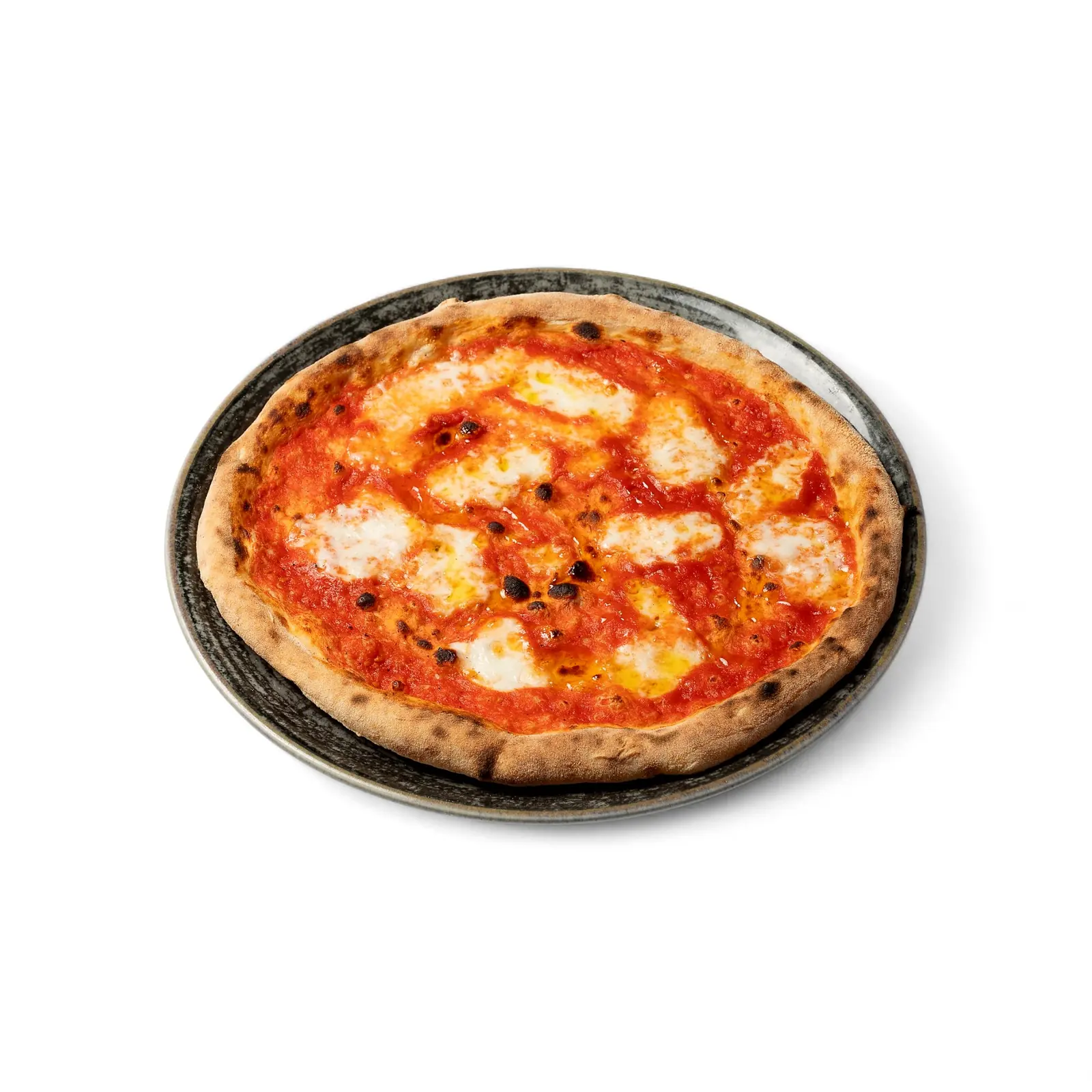

Pizza
Pizza a portafoglio is a Neapolitan pizza folded in four, “like a wallet”, and eaten in the street, on the go. It's usually smaller than a pizza served at the table, and most often it's a marinara or a Margherita. It folds because classic Neapolitan pizza has a soft, supple centre.
In Naples, pizza isn't only eaten at the table. At the counter windows of pizzerias in the centre you buy pizza a portafoglio: folded in four, wrapped in paper, to eat standing up or on your way somewhere.
The name comes from the Italian word “portafoglio”, a wallet. The pizza is folded in half, then in half again, and held in your hand like a wallet. The hot sauce stays inside and your fingers stay clean. More or less.
In Naples people talk about two ways of folding, though the names are often used interchangeably. A libretto, like a little book, usually means folded once, in half. A portafoglio means folded again, into four.
The pizzas folded a portafoglio are usually the simplest: a marinara with tomato, garlic and oregano, or a Margherita. The fewer the toppings, the easier it is to fold and eat by hand.
Only a pizza with a soft, supple centre can be folded. Classic Neapolitan pizza has a thin, moist centre and a low, springy rim, so it bends instead of breaking. A thin Roman pizza, crisp from edge to centre, would crack in your fingers. We explain the differences in our piece on Neapolitan vs Roman pizza.
The pizza contemporanea we bake at Bottegas has the same soft centre, but a clearly taller, airier rim. It folds too, though the tall cornicione has its say. There's more on that in our piece on pizza contemporanea.
Pizza a portafoglio belongs to Naples' street food, alongside fried snacks served in a cuoppo, a paper cone, and pizza fritta, fried in deep oil.
It's food for people in a hurry: quick, hot and cheap. And good proof that in Naples pizza was everyday food from the start, not something for special occasions.
At the table, the pizza arrives whole, straight from the oven. Nobody in Naples will raise an eyebrow if you start with a knife and fork: the centre is soft, so the first few bites are easiest with cutlery. After that, use your hands — fold a slice in half, a libretto, and eat from the tip.
There's no need to leave the rim on the plate. On a good pizza it's light and worth eating on its own.
If you're ordering takeaway or delivery, open the box straight away: steam softens the rim, and Neapolitan pizza is at its best in the first few minutes. From Oboźna we deliver ourselves; from Francuska, Glovo delivers.
At Bottegas Śródmieście, ul. Oboźna 9, and at Bottegas Saska Kępa, ul. Francuska 24. The dough matures for 48 hours, the oven runs at 485°C, and the sauce is made from San Marzano DOP tomatoes. A Margherita costs 39 zł.
You'll find the whole menu on the Bottegas Śródmieście menu and on our page about Neapolitan pizza in Warsaw.
A Neapolitan pizza folded in four, “like a wallet”, wrapped in paper and eaten in the street. It's usually smaller than a pizza served at the table, most often a marinara or a Margherita.
Usually a libretto means folded once, in half, like a little book, and a portafoglio folded into four, like a wallet. In Naples the two names are often used for the same thing.
At the table, start with a knife and fork, because the centre is soft. Then you can eat with your hands, folding the slices in half.
At the table we serve the pizza whole, straight from the oven. You're welcome to fold it yourself: a libretto or a portafoglio.
We use cookies for statistics (Google Analytics) and marketing (Meta, TikTok, Google Ads). Consent is optional and you can change it at any time. Privacy policy