Kitchen
Italiano vero: what it means and how to spot real Italian food

Kitchen
“Italiano vero” is Italian for “a true Italian” or “truly Italian”. The phrase is best known from Toto Cutugno's 1983 song “L'italiano”. At Bottegas in Warsaw it's the last part of our motto, “Semplice. Fresco. Italiano vero.”: we cook the real Italian way, with no “Italian-style” makeovers.
Toto Cutugno's “L'italiano” is one of the best-known Italian songs. Cutugno sang it at the Sanremo festival in 1983, and in the chorus he introduces himself as “italiano vero”, a true Italian.
The song lists the small things of everyday Italian life, from coffee to pasta al dente. That's why, for Italians, “italiano vero” means more than a passport: it's a way of living, and at the table, a way of cooking.
Our motto has three parts, and each one means something in the kitchen. Semplice, simple: a few ingredients on the plate, and you can taste every one. Fresco, fresh: ragù cooked from scratch for 4 hours every day, pasta and desserts made in house. Italiano vero: truly Italian.
That last part is the hardest, because “Italian” is easy to write on a menu. What it looks like on the plate at Bottegas is on our page about our Italian restaurant in Warsaw.
Bottegas was founded by three friends from Italy: Antonio and Roberto from Naples, and Matteo Liscaio from Tuscany. That's two different Italys and two cuisines that Italians tell apart without a second thought.
Naples means pizza, mozzarella di bufala from Campania, San Marzano tomatoes from the plain below Vesuvius, friarielli and ragù cooked for hours.
Tuscany is a cuisine of bread, olive oil and fire: bistecca alla fiorentina, ribollita soup and pecorino. Tuscan bread is baked without salt.
Our menu leans south: Neapolitan pizza, arancini from Sicily, cialledda salad from southern Italy, caffè leccese from Salento. What both sides share is the same belief: fewer products, but good ones.
Not by the flag in the window. Here are a few things Italians themselves look at.
A short menu. A kitchen that does everything does nothing really well. A short menu can be cooked the same way every day.
Names of products and regions. A good menu tells you what a dish is made of and where it comes from: San Marzano DOP, pecorino romano DOP, Prosciutto di Parma DOP. “Italian-style” on its own means nothing.
Carbonara with no cream. Guanciale, egg yolk, pecorino romano and pepper — that's how Rome makes it. Cream in a carbonara is the first sign of a kitchen taking shortcuts. We cover the recipe and the technique in our piece on carbonara with no cream.
Pasta al dente. Pasta should push back slightly when you bite it. To an Italian, overcooked pasta is a mistake, not a style.
Aperitivo as a ritual. In Italy, aperitivo is the hour before dinner and something bitter in a small glass, with ice, a slice of orange and olives. We write about it in our piece on aperitivo.
Coffee the Italian way. After dinner, an espresso. Italians tend to drink cappuccino in the morning.
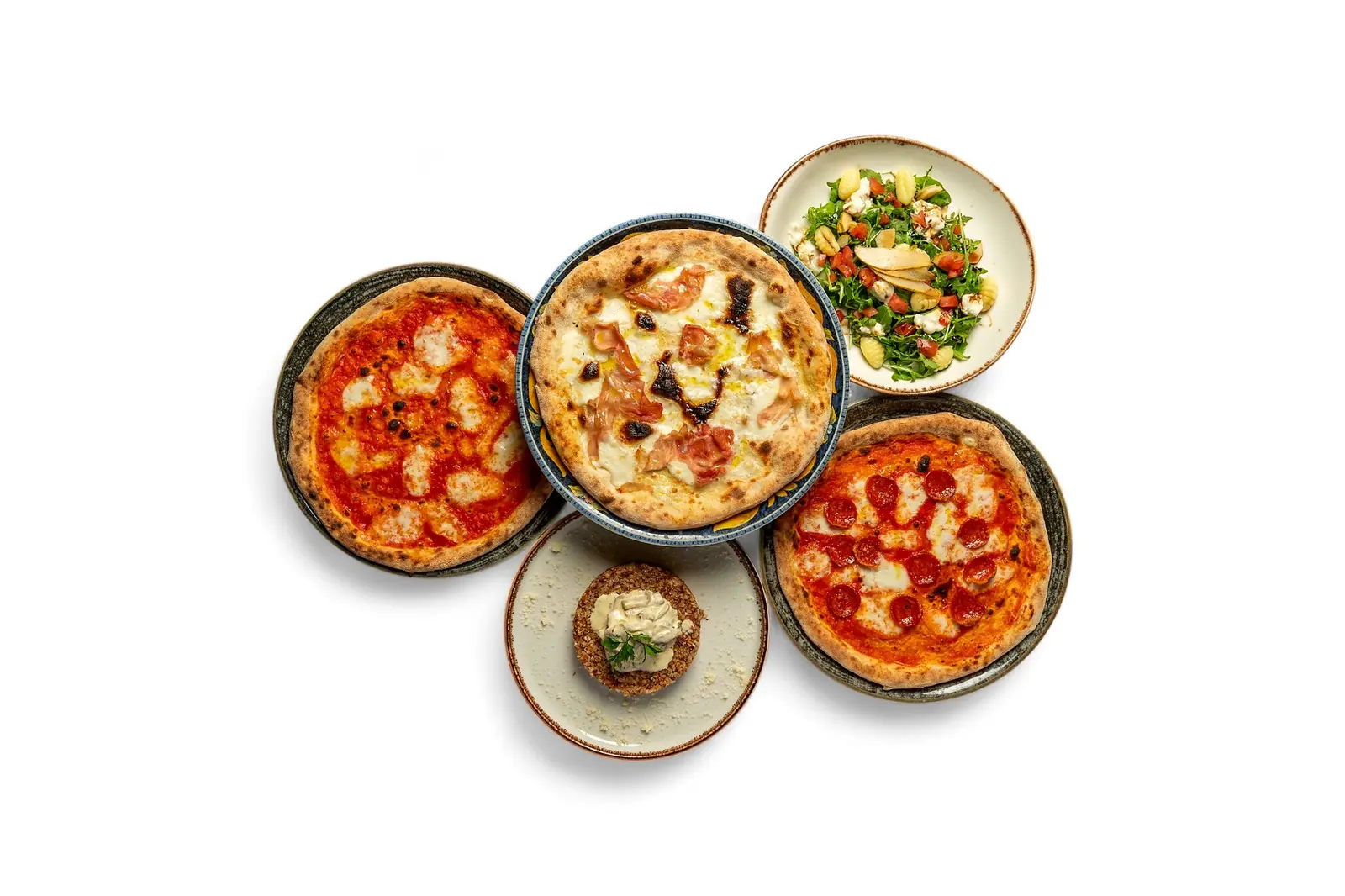
Every guest who sits down at a table is welcomed with a piece of hot, tall focaccia with a drop of olive oil. Pizza goes from the oven straight to the table. We cook the ragù for 4 hours, make the ravioloni by hand and make our desserts in house.
We have two restaurants: Bottegas Śródmieście at ul. Oboźna 9, in the centre but away from the bustle of the city, and Bottegas Saska Kępa at ul. Francuska 24, more intimate and elegant. The food and prices are the same at both.
It's Italian for “a true Italian” or “truly Italian”. The phrase is best known from Toto Cutugno's 1983 song “L'italiano”.
“Simple. Fresh. Truly Italian.” It's the Bottegas motto, and the rule we build our menu by.
By a short menu, products named with their origin, DOP for example, pasta al dente and carbonara with no cream.
Three friends from Italy: Antonio and Roberto from Naples, and Matteo Liscaio from Tuscany.
We use cookies for statistics (Google Analytics) and marketing (Meta, TikTok, Google Ads). Consent is optional and you can change it at any time. Privacy policy